Find single-family homes for sale in Brookline, MA, with Boston, MA real estate agent Colin Bayley.
The Brookline real estate market functions as a highly competitive, luxury-tier environment where restricted inventory encounters consistent demand from buyers looking to secure a foothold near Boston. While the single-family home tier sits firmly out of reach for most average buyers with multimillion-dollar pricing, a robust condominium sector helps diversify options, though even these properties regularly command premium square-foot rates. Overall, low months of supply continue to lean market conditions heavily in favor of sellers, keeping transaction timelines exceptionally brief and ensuring home values remain among the highest in the state.
Median Sale Price
Year-to-Date Sale Price
Median Days on Market
Sale-to-List Price Ratio
A single-family home in Brookline functions less like traditional residential property and more like a scarce, blue-chip financial asset. Because the town is fundamentally landlocked and predominantly built out with multi-family housing and condominiums, standalone single-family homes are highly finite, with the average sale price hovering around $3.04 million. While luxury or premium single-family markets in the Sun Belt or sprawling Midwestern suburbs are subject to broader economic volatility and localized overbuilding, Brookline’s strict zoning and historical preservation acts as a structural shield. Purchasing a single-family home here secures a piece of highly protected land in an enclave where demand is permanently driven by institutional wealth, world-class medical professionals, and elite academics, providing an unrivaled level of capital insulation and compounding appreciation.
Unlike purchasing a single-family estate in distant, car-dependent Massachusetts suburbs like Weston, Wellesley, or Concord, owning a home in Brookline gives you full lot autonomy without sacrificing urban convenience. You can own a private yard, a multi-car driveway, and detached structural space while remaining directly connected to the MBTA Green Line. While a single-family home in other parts of the country often requires a disconnected, isolated lifestyle, Brookline acts as a true transit-oriented urban oasis. You retain the ability to expand your footprint, landscape a private garden, or build out an autonomous single-family sanctuary, all while being a short walk from vibrant commercial squares and a ten-minute commute from downtown Boston and the Longwood Medical Area.
While high-net-worth families across the country often have to look to expensive private school tuitions or highly competitive city lotteries to secure a premium education for their children, single-family home ownership in Brookline guarantees placement into one of the top-ranked public school systems in the United States. The Public Schools of Brookline are renowned for their massive municipal funding, exceptional student-to-teacher ratios, and advanced academic paths. Because single-family homes sit at the pinnacle of Brookline's residential tax base, owning a full lot establishes deep roots within the community and ensures your children can move seamlessly through top-tier neighborhood schools. This permanent educational draw keeps the tenant and buyer pool for single-family homes intensely competitive year-round, ensuring your property remains highly liquid and permanently coveted.
When purchasing a standalone single-family home in Brookline, Massachusetts, you are investing in one of the most protected, historically scrutinized, and strictly zoned residential land markets in the United States. Because single-family homes represent a finite, premium segment of Brookline’s housing stock, buying a house here requires navigating complex local bylaws that simply do not exist in other suburban towns.
If you are eyeing a single-family home with plans to build an addition, an expansive back deck, or a detached structure, you must cross-reference Brookline's strict Usable Open Space requirements. Added to the town's zoning bylaws to preserve green gaps between properties, this rule mandates that a specific percentage of your lot must remain unpaved open space.
Crucially, Brookline defines "usable" very rigidly: the area must be generally flat and measure at least 25 feet in any direction. Because many older or historic single-family lots in Brookline are narrow or uniquely shaped, a property might have plenty of total square footage in the yard but completely fail the 25-foot dimensional test, legally blocking you from making future footprint modifications without securing a rare zoning variance.
A high percentage of Brookline’s single-family homes are historic Victorians, Colonials, and Shingle-style residences featuring original lath-and-plaster interior walls. When upgrading the home’s energy efficiency, buyers often look to Massachusetts’ robust Mass Save utility program for insulation incentives.
However, retrofitting these specific properties carries severe architectural risks. Standard blown-in cellulose or spray-foam insulation can alter the moisture migration patterns of historical, uninsulated wall cavities, trapping condensation against historic wood framing and leading to accelerated rot. Additionally, drilling through exterior historic shingles or interior plaster to inject insulation requires specialized techniques to ensure you do not permanently damage the home's historic integrity.
Unlike newer master-planned communities across the country, Brookline’s century-old municipal infrastructure includes areas with "combined sewers" or highly sensitive storm drain networks. If you purchase a single-family home and want to modify the exterior—such as installing a new cobblestone driveway, a private patio, or changing the grading of your lawn—the town’s Department of Public Works (DPW) enforces rigid rules regarding runoff.
You are legally prohibited from directing new gutters, sump pumps, or surface stormwater runoff into the town's sanitary sewer system. Any increase in non-permeable surfaces requires you to engineer and install an on-site subsurface drainage system (such as dry wells or infiltration chambers) on your private lot to capture and manage 100% of the stormwater locally.
Following recent Massachusetts state regulations, Brookline updated its zoning framework to allow Accessory Dwelling Units (ADUs)—like carriage houses or basement apartments—by right on single-family lots. While this opens up fantastic opportunities for multi-generational living or rental income, the local execution is highly nuanced. In Brookline, a "Protected Use ADU" is strictly capped at the lesser of 900 square feet or 50% of the gross floor area of your main house. Furthermore, Brookline explicitly bans these units from being used as short-term rentals (anything under 27 consecutive days), meaning you cannot use the space for Airbnb hosting. Navigating the layout, egress, and local historical commission approvals for an ADU requires rigorous due diligence before making an offer.
Brookline’s dramatic, historic topography—including steep neighborhoods like Corey Hill and Aspinwall Hill—means that many single-family properties rely heavily on massive, ancient stone retaining walls to support terraced yards and driveways. When purchasing a home here, assessing the structural health of these walls is paramount.
If a historic stone wall is leaning or failing, rebuilding it requires specialized masonry crews, extensive permitting, and potentially historic commission approval, which can cost upwards of $50,000 to $100,000. Furthermore, because these hills are built upon dense subterranean granite deposits, any structural excavation or expansion will likely require specialized ledge-hammering or blasting permits, heavily impacting your renovation budget and timeline.
Many of Brookline's most exclusive single-family homes are tucked away on historic "private ways" or shared access roads rather than town-maintained public streets. When you own a home on a private way, the town is not responsible for plowing snow, repairing potholes, maintaining streetlights, or repaving the asphalt.
Before closing on a property, it is vital to review the chain of title to understand your exact legal and financial obligations. You must look for established, legally binding Road Maintenance Agreements or shared easements among the neighbors. In the absence of a formal agreement, a single major infrastructure failure under the road can lead to complex civil disputes or unexpected, split-cost financial burdens among a handful of homeowners.
Buying a single-family home in Brookline means acquiring a complex piece of real estate history. We look far past the surface cosmetics, conducting deep-dive forensics into zoning records, plot plans, and local bylaws to protect your long-term wealth. If you want to pull the zoning map for a specific single-family lot, review the historical deed restrictions on a property, or coordinate a private walkthrough of an upcoming listing, our team is equipped to handle your search with complete precision.
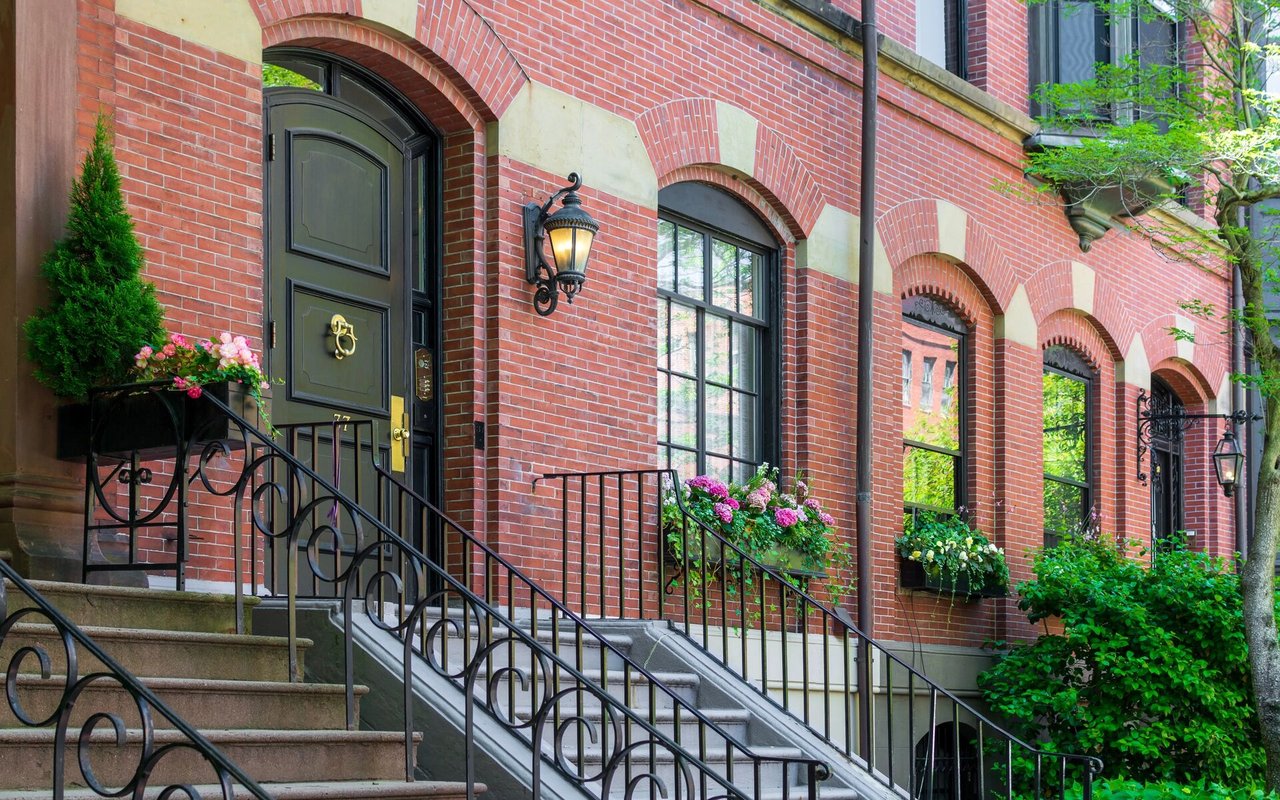
Tucked just minutes from downtown Boston, Brookline blends leafy residential charm with the energy of a true urban village—tree-lined streets, historic homes, top-rated schools, and a dining scene that rivals the city next door. Whether you're drawn to the bustle of Coolidge Corner, the quiet elegance of Fisher Hill, or the green expanse along the Emerald Necklace, there's a corner of Brookline that feels like home. Explore our neighborhood guide to discover what makes each pocket of this beloved community unique—and start picturing your next chapter here.

Compass
126 Newbury Street
2nd Floor
Boston MA 02116
Colin Bayley


