Find luxury homes for sale in Brookline, MA, with Boston, MA real estate agent agent Colin Bayley.
The Brookline real estate market functions as a highly competitive, luxury-tier environment where restricted inventory encounters consistent demand from buyers looking to secure a foothold near Boston. While the single-family home tier sits firmly out of reach for most average buyers with multimillion-dollar pricing, a robust condominium sector helps diversify options, though even these properties regularly command premium square-foot rates. Overall, low months of supply continue to lean market conditions heavily in favor of sellers, keeping transaction timelines exceptionally brief and ensuring home values remain among the highest in the state.
Median Sale Price
Year-to-Date Sale Price
Median Days on Market
Sale-to-List Price Ratio
The primary differentiator for Brookline’s luxury real estate is the rare availability of sprawling, multi-acre historic estates located directly on the border of a major global city. While high-net-worth buyers in states like California, Florida, or Texas can easily find modern mega-mansions in sprawling suburban subdivisions, Brookline’s premier neighborhoods—such as Fisher Hill, Greenways, and the exclusive Estate Area—boast grand, architecturally significant historic manors surrounded by lush, private rolling lawns. Because Brookline is geographically fixed and densely built out, there is virtually zero raw land left for new development. Acquiring a luxury home here means buying into a strictly finite, historically preserved collection of properties where structural grandness is paired with genuine spatial privacy—a luxury that is practically non-existent elsewhere within a ten-minute drive of Boston’s financial and medical cores.
Unlike the luxury markets of New York, Miami, or Los Angeles, where a sprawling estate requires a grueling multi-hour commute into the commercial center, Brookline luxury properties offer immediate, seamless proximity to the epicenter of global healthcare, biotechnology, and higher education. Positioned directly adjacent to the Longwood Medical Area—home to Harvard Medical School and world-renowned research institutions—and mere minutes from downtown Boston, Brookline allows elite professionals, academics, and executives to split their days between high-stakes work environments and a quiet, secure sanctuary. While other wealthy Massachusetts towns like Concord or Manchester-by-the-Sea offer high-end homes, they come at the cost of significant daily travel time. Brookline bridges this gap perfectly, allowing luxury homeowners to completely bypass major highway congestion while maintaining an ultra-exclusive lifestyle wrapped inside a charming, independent town.
From a wealth-preservation standpoint, Brookline’s luxury housing market behaves less like typical real estate and more like an elite defensive asset class. The town's combination of a nationally top-ranked public school system, immense historical prestige, and strict municipal zoning laws creates a permanent foundation of intense institutional and private demand. Even during broader macroeconomic corrections or rising interest rate environments that can destabilize luxury markets in the Sun Belt or West Coast, Brookline consistently maintains its values, with the average single-family home price pushing past $3.18 million. Because a high percentage of high-end transactions in this enclave are executed in cash or backed by substantial generational wealth, the local market is heavily insulated from speculative bubbles, offering luxury buyers a level of financial stability and reliable long-term capital appreciation that few other zip codes in the United States can replicate.
Acquiring a luxury single-family home or grand estate in Brookline, Massachusetts, means purchasing a piece of highly protected, historically significant, and heavily regulated real estate. Because Brookline functions as an independent, hyper-progressive town completely enveloped by an urban metropolis, the luxury market here behaves differently than any other premier market in the country.
If you are planning to buy a historic luxury estate with the intent of executing a substantial architectural overhaul or footprint expansion, you must contend with Article 5.3 of Brookline’s General By-Laws. In Brookline, "demolition" is not defined merely as tearing a building down to the ground. Altering, covering, or removing just 25% of a property's original exterior walls or significantly modifying a historic roofline instantly triggers a formal review by the Brookline Preservation Commission. If the home is deemed historically significant, the town can impose a mandatory 12-to-18-month demolition delay stay on your permits. Navigating these parameters requires deep local expertise to structure your purchase contingencies correctly.
Brookline is a national leader in municipal climate legislation and operates under a strict, opt-in Specialized Energy Code. For luxury buyers, this means any new residential construction or highly substantial addition exceeding 4,000 square feet must achieve a completely Net Zero energy rating or be engineered as a fully electric property. If you choose a mixed-fuel plan (such as incorporating a high-end gas chef's kitchen or gas hearths), the town legally mandates the installation of comprehensive, pre-wired electrical backups for future electrification, alongside dedicated solar infrastructure. Reviewing the energy modeling and Home Energy Rating System (HERS) score of a luxury home is a vital component of the due diligence phase.
While many national luxury buyers are accustomed to strict interior and exterior Homeowners Association (HOA) rules, Brookline achieves this level of control through municipal Local Historic Districts (LHDs) in neighborhoods like Pill Hill, Cottage Farm, and Chestnut Hill. The Brookline Preservation Commission’s jurisdiction extends to any feature visible from a public way, park, or body of water. Crucially, this does not just apply to the home's facade—it governs changes to your landscaping grade, stone retaining walls, the positioning of exterior HVAC condenser units, and even the paving materials used for expansive driveways meant to park more than four vehicles. For luxury estates, existing foliage and wooden fences are legally deemed not to block public sightlines, meaning you cannot shield unapproved modifications behind a privacy hedge.
The sprawling, canopy-covered lawns of Brookline’s grandest estates are heavily guarded by town environmental ordinances. Under Brookline’s strict tree protection bylaws, any tree on a private lot with a Diameter at Breast Height (DBH) of six inches or greater is considered a protected town asset. If your vision for a luxury home involves clearing space for a private tennis court, an infinity pool, or a detached carriage house guest suite, you must secure an explicit town permit. Unauthorized removal or unapproved construction damage to a protected tree can result in forced replanting schedules or compounding mitigation penalties calculated at $500 per inch of DBH, which can easily scale into tens of thousands of dollars in unexpected site costs.
For custom builds or major expansions on historic luxury lots, Brookline strictly enforces Floor Area Ratio (FAR) caps to limit neighborhood density. This metric limits the total allowable livable square footage relative to your total lot size. Maximizing your layout requires a highly strategic architectural approach—such as engineering custom lower-level or attic spaces that can be legally excluded from FAR calculations. Furthermore, Brookline’s iconic hills (like Corey Hill and Aspinwall Hill) feature a dense subterranean geography rich in massive subterranean granite deposits. Expanding a luxury basement to accommodate an underground wine cellar, private theater, or wellness spa frequently requires extensive, specialized ledge-hammering or blasting permits, which drastically impacts construction timelines and site budgets.
A vast portion of Brookline’s ultra-luxury single-family homes are 19th-century Victorians, brick Shingle-style manors, or expansive Georgian Colonials. While these homes offer a degree of old-world craftsmanship that cannot be replicated today, their interior floor plans are traditionally compartmentalized. Transforming a historic Brookline manor into a modern, flowing luxury layout with an expansive great room and open-concept kitchen requires extensive structural intervention. Because local zoning and historic commissions heavily restrict modifying the exterior load-bearing architecture, high-end renovations require concealing massive structural steel beams seamlessly inside historic plaster ceilings to maintain structural integrity without altering the building's protected external silhouette.
Procuring a luxury estate in Brookline requires more than evaluating a floor plan; it demands a forensic understanding of historical bylaws, municipal energy codes, and local site logistics. We protect your wealth and your time by managing every micro-detail of the acquisition process. If you are searching for an exceptional historic estate, require access to exclusive off-market listings, or want an expert team to analyze town zoning records for a specific property, we are at your service.
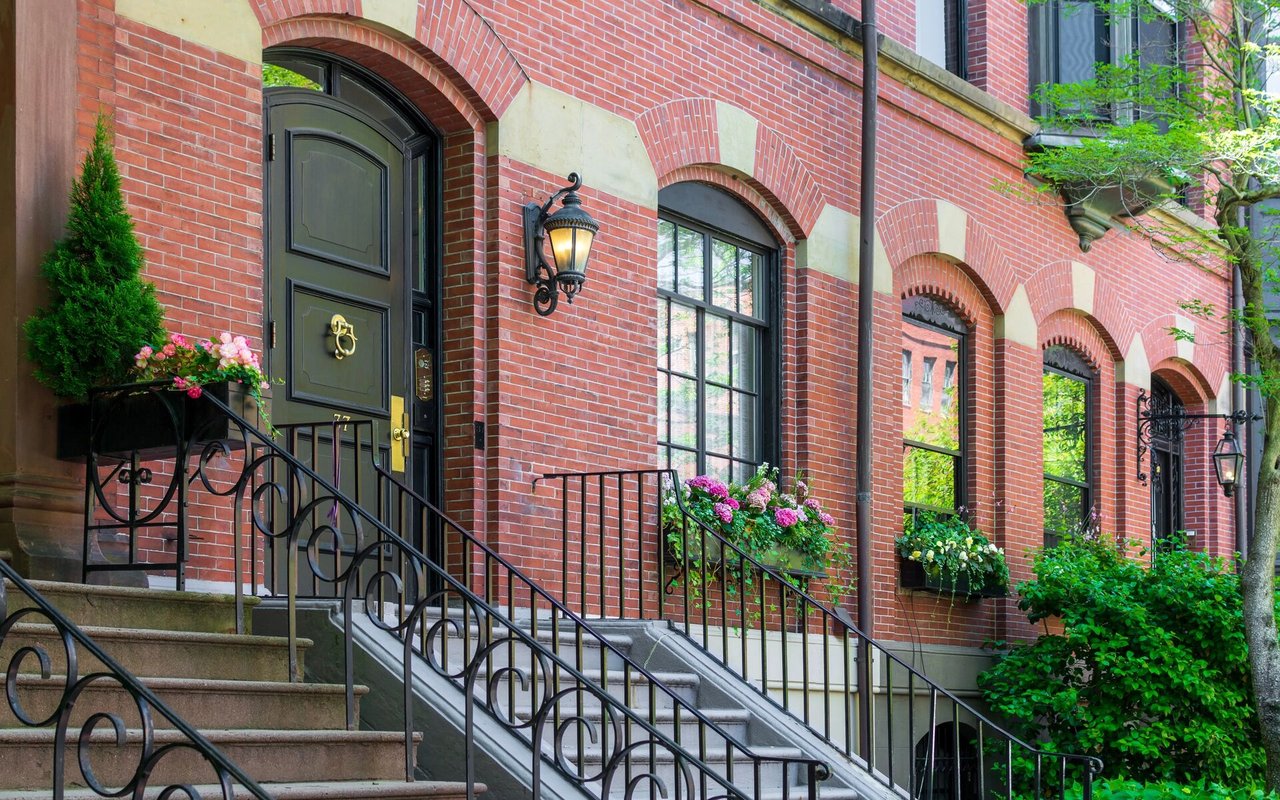
Tucked just minutes from downtown Boston, Brookline blends leafy residential charm with the energy of a true urban village—tree-lined streets, historic homes, top-rated schools, and a dining scene that rivals the city next door. Whether you're drawn to the bustle of Coolidge Corner, the quiet elegance of Fisher Hill, or the green expanse along the Emerald Necklace, there's a corner of Brookline that feels like home. Explore our neighborhood guide to discover what makes each pocket of this beloved community unique—and start picturing your next chapter here.

Compass
126 Newbury Street
2nd Floor
Boston MA 02116
Colin Bayley


