Find homes for sale in Brookline, MA, renowned for being a historic, wealthy "streetcar suburb" of Boston that is home to The Country Club
The Brookline real estate market functions as a highly competitive, luxury-tier environment where restricted inventory encounters consistent demand from buyers looking to secure a foothold near Boston. While the single-family home tier sits firmly out of reach for most average buyers with multimillion-dollar pricing, a robust condominium sector helps diversify options, though even these properties regularly command premium square-foot rates. Overall, low months of supply continue to lean market conditions heavily in favor of sellers, keeping transaction timelines exceptionally brief and ensuring home values remain among the highest in the state.
Median Sale Price
Year-to-Date Sale Price
Median Days on Market
Sale-to-List Price Ratio
The Brookline housing market enters mid-2026 as a premium, high-value environment characterized by an overall median home price hovering around $1.5 million to $1.7 million. The market features a stark divergence between its single-family home and condominium segments; single-family homes command a steep average sale price of roughly $3.04 million, while the highly active condo sector averages a more accessible but still luxury-tier $1.38 million. Overall inventory has seen a marginal, modest increase compared to the ultra-tight pandemic-era historic lows, but the town remains structurally undersupplied due to strict local zoning and limited space for new residential construction.
Competition in Brookline remains intensely fierce, particularly for well-located, turnkey properties near public transit or commercial hubs. Homes move incredibly fast, frequently going under contract with a median of just 13 to 17 days on the market, though larger single-family estates can take upwards of 50 days to secure an offer. Bidding wars are a standard hurdle for prospective buyers, as evidenced by an average sale-to-list price ratio sitting right at or slightly above 101.0%. Sellers who price their properties realistically continue to hold the upper hand, routinely securing full-ask or over-ask offers within their first two weeks of listing.
The high barrier to entry in the purchasing market has funneled deep, sustained demand into Brookline's rental sector, where nearly half of the town's housing stock is renter-occupied. Average monthly rents have climbed to a steep range of $3,400 to $3,600, propelled by an influx of younger working professionals and students drawn to the neighborhood's supreme walkability and easy T-line access into Boston. Furthermore, living in Brookline is becoming an even higher-cost endeavor for homeowners, with municipal property tax adjustments pushing the average single-family annual tax bill past the $20,000 threshold, solidifying the town's status as a premium, high-amenity enclave.
When purchasing a home in Brookline, Massachusetts, you are investing in one of the most distinct, historically rich, and structurally unique municipalities in the country. Because Brookline chose to remain an independent town entirely surrounded by Boston, it has developed its own highly hyper-local bylaws, structural anomalies, and zoning quirks.
Unlike almost any other municipality of its size, Brookline enforces a strict, town-wide overnight street parking ban. Between the hours of 2:00 AM and 6:00 AM, parking any vehicle on a public street for longer than one hour is entirely illegal, year-round. This means that if a single-family home or condominium does not include a "deeded" or assigned off-street parking spot, you or your guests cannot leave a car outside. While the town rents out a very limited number of overnight spaces in specific municipal lots for a monthly fee, a lack of dedicated off-street parking can severely impact a property’s resale value and daily convenience.
If you fall in love with a property in historic neighborhoods like Pill Hill, Cottage Farm, Chestnut Hill, or Harvard Avenue, you will likely be purchasing within a designated Local Historic District. The Brookline Preservation Commission possesses immense authority over any exterior modifications, additions, or structures that are "visible from a public way" (which includes standing on a public sidewalk). Even replacing windows, changing a roof color, or installing a fence requires a formal review and a Certificate of Appropriateness. If you plan to add a modern addition or alter the facade, the approvals process can add months and significant architectural costs to your timeline.
The vast majority of Brookline's housing inventory consists of multi-family brownstones and brick row houses built between 1880 and 1930. When buying a condo in these buildings, you must evaluate elements that are completely unique to early-20th-century construction. Many of these buildings rely on localized steam heating systems with cast-iron radiators managed by a central association boiler, meaning you cannot adjust your individual unit temperature digitally. Furthermore, these older masonry buildings require massive, recurring capital expenditures for "repointing" (repairing the mortar between bricks) and lintel replacement, which can trigger surprise assessments if the HOA reserves are low.
Because Brookline is defined by its historic architecture, an overwhelming percentage of homes were built well before the 1978 federal ban on lead-based paint. Under Massachusetts Lead Law, if a child under six years old resides in the home, the property owner is legally required to have the home inspected and completely delamped or interim-controlled. In Brookline's competitive market, homes are frequently sold "as-is" regarding lead paint, meaning buyers routinely inherit thousands of dollars in remediation liabilities. Understanding how to structure an offer around this mandate is crucial.
While Brookline offers world-class public amenities and schools, it comes with a substantial carrying cost. Property values are incredibly high, and the average annual single-family property tax bill easily surpasses $20,000 to $30,000 depending on the neighborhood. However, Brookline offers a unique financial mechanism known as the Residential Exemption for property owners who use the home as their primary, principal residence. This program slashes a fixed dollar amount off the assessed value of your property tax bill every single year, providing a massive financial relief mechanism that out-of-state or investor buyers do not qualify for.
A massive trend in Brookline involves developers purchasing grand, historic single-family Victorian estates or two-family structures and converting them into luxury, multi-unit condominiums. While these homes offer gorgeous modern interiors wrapped in historic shells, they create complex legal landscapes. You must meticulously review the newly drafted Master Deed and Condominium Bylaws to evaluate split percentages for shared liabilities, insurance policies for common roofs, and how disputes are handled in an association that may only consist of two or three total units.
Navigating Brookline's hyper-local rules, parking challenges, and historic guidelines requires an expert hand. If you would like to look at properties currently on the market, analyze a specific neighborhood, or schedule a private showing for a home or condo, please contact us today to guide your journey.
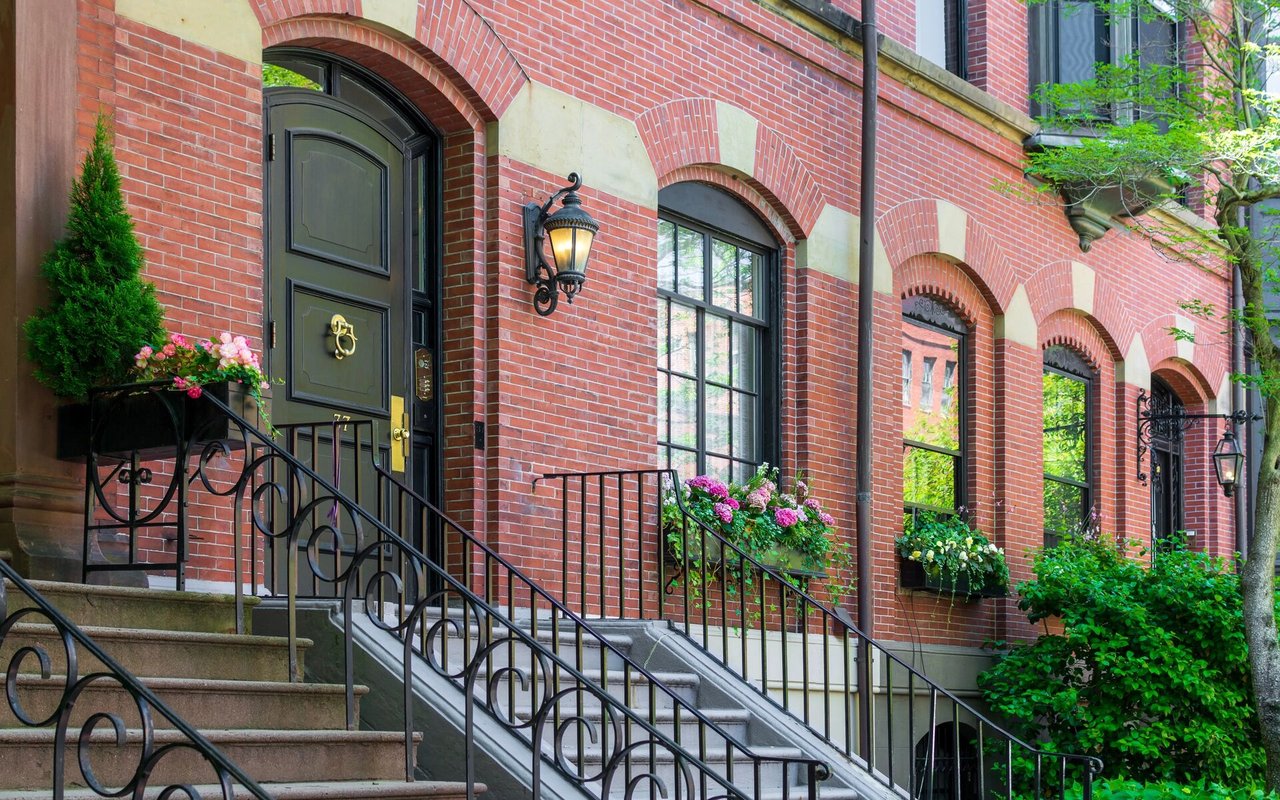
Tucked just minutes from downtown Boston, Brookline blends leafy residential charm with the energy of a true urban village—tree-lined streets, historic homes, top-rated schools, and a dining scene that rivals the city next door. Whether you're drawn to the bustle of Coolidge Corner, the quiet elegance of Fisher Hill, or the green expanse along the Emerald Necklace, there's a corner of Brookline that feels like home. Explore our neighborhood guide to discover what makes each pocket of this beloved community unique—and start picturing your next chapter here.

Compass
126 Newbury Street
2nd Floor
Boston MA 02116
Colin Bayley


