Boston, MA Neighborhood Guide
Boston is a small city with an outsized market. Housing supply is limited, demand from universities, hospitals, and tech employers stays steady, and every neighborhood has its own architecture, pace, and price per square foot. This guide covers what each area offers, what homes cost, and what buyers should know before making an offer.
About Boston, Massachusetts
Boston is one of the oldest cities in the United States and one of its most influential. Harvard and MIT sit just across the Charles River in Cambridge. Mass General and Brigham and Women's anchor a medical economy that draws professionals from around the world, and biotech, finance, and software firms fill the Seaport and downtown office towers.
That mix shapes who lives here: a highly educated workforce, a large student population, and a steady flow of international buyers and relocating professionals. The city is compact and dense, so neighborhoods like Back Bay, Beacon Hill, the South End, the Seaport, East Boston, and South Boston sit within a few miles of each other yet feel very different.
Boston Real Estate Market Overview
Boston's market is defined by one fact: there isn't enough housing for the people who want it. The ocean, the Charles River, and strict zoning limit new development, so inventory stays low and well-priced homes move quickly.
Metric | Current Range | What It Means |
|---|
Median sale price | ~$828,000–$841,000 | Roughly double the national median |
Median listing price | ~$882,000 | Central zip codes keep pricing power |
Median days on market | 30–35 days | Good homes go within weeks |
Sale-to-list ratio | ~98.8%–99% | Most homes sell near or above asking |
Average rent | ~$3,271–$3,300/month | Among the highest in the U.S. |
The market splits into three tiers. Back Bay, Beacon Hill, and the South End command $1,100 to $2,200+ per square foot for historic brownstones and high-end condos. The Seaport and East Boston lead in new high-rise construction. Brighton, Allston, and Dorchester offer lower entry points and attract first-time buyers and multi-family investors.
Renters make up more than 60% of residents, and the September 1 lease turnover, driven by students, creates an intense leasing cycle every year. Investors buying rental units should time closings and lease-ups around that date.
Types of Homes in Boston
Most Boston buyers end up choosing among four property types:
- Condominiums are the most common purchase in the city. Many are units carved out of 19th-century brownstones and rowhouses, while others are in modern elevator buildings with concierge service.
- Historic brownstones and rowhouses define Back Bay, Beacon Hill, and the South End. Intact single-family townhouses are rare and typically start in the millions.
- Lofts and new construction are concentrated in SoWa, the Seaport, and East Boston, with open layouts, elevators, and garage parking that older buildings lack.
- Detached single-family homes are scarce inside city limits. Buyers who want a yard usually look to Brookline or Newton.
Older buildings carry character but come with trade-offs: walk-ups, no dedicated parking, and historic district rules on exterior changes.
Back Bay: Victorian Brownstones and Newbury Street Living
Back Bay was built on 19th-century landfill and planned after Haussmann's Paris boulevards. The result is Boston's only true street grid: Beacon Street, Marlborough Street, Commonwealth Avenue, and Newbury Street run parallel, crossed by alphabetical streets from Arlington to Hereford.
The brownstones. French Academic, Italianate, and Renaissance Revival townhouses line the blocks, with 10- to 14-foot parlor ceilings, carved mantels, ornate moldings, and bay windows. Most have been converted into floor-through condos or smaller units. Intact single-family townhouses trade between $8 million and $23 million or more. Condo pricing typically runs $1,300 to $2,000+ per square foot, depending on floor, light, and finish.
Newbury Street living. The eight blocks from the Public Garden to Massachusetts Avenue combine retail and galleries at street level with residences above. One-bedroom condos run about $600,000 to $950,000, two-bedrooms about $1.3 million to $2.5 million, and penthouses can reach $5 million to $17 million. Boutique buildings such as 360 Newbury offer elevators and concierge service.
What buyers should know: Exterior changes to windows, masonry, or roof decks require approval from the Back Bay Architectural District Commission. Many conversions have no elevator. Newbury Street units get more foot traffic and noise than Marlborough Street or Commonwealth Avenue, and deeded parking is costly when it's available at all.
Beacon Hill: Historic Gas-Lit Streets and Federal-Style Rowhouses
Beacon Hill sits directly north of Boston Common. Its narrow cobblestone streets, working gas lamps, and brick sidewalks make it one of the best-preserved historic neighborhoods in the country. Most homes date to the late 1700s and early 1800s and feature symmetrical red-brick Federal facades, fanlight windows, wrought-iron railings, and brass door knockers.
The Hill has three distinct parts:
- The South Slope, along Mount Vernon and Chestnut Streets, holds the grandest multi-story rowhouses.
- The North Slope has smaller footprints and more condo conversions and studios, making it the most accessible entry point.
- The Flat of the Hill, near Charles Street and Storrow Drive, offers wider layouts and the most convenience.
Condos range from about $750,000 for a one-bedroom to $4.5 million or more for renovated multi-level units. Single-family rowhouses run from $6.5 million to over $18 million, and overall pricing sits around $1,400 to $2,200+ per square foot.
Daily life centers on Charles Street's shops, cafes, and markets. Parking is the biggest challenge: a single garage space on the Hill can sell for $350,000 to $500,000, so a home that includes one carries real added value.
South End: Victorian Row Houses and Boston's Dining Scene
The South End is the largest intact Victorian residential district in the United States. Built mainly between 1850 and 1880, its bowfront brick row houses curve outward to bring more light into the parlor floors. Homes face leafy residential squares with cast-iron fences, while Tremont Street, Washington Street, and Columbus Avenue supply the commercial life.
Buyers usually choose between brownstone condos, such as parlor-level duplexes or garden units with private brick patios, and loft conversions in SoWa, where former factories now have open layouts, concrete floors, and high ceilings. One- and two-bedroom condos range from about $700,000 to $1.8 million. Single-family row houses run $4.5 million to $10 million or more, with premiums for homes facing a private park or with garage parking. Pricing averages $1,100 to $1,700 per square foot, making the South End slightly more approachable than Back Bay or Beacon Hill for similar historic stock.
This is Boston's food neighborhood: chef-owned restaurants, sidewalk patios, galleries, and the SoWa Open Market on weekends. Buyers who want the most social, restaurant-driven lifestyle downtown tend to land here.
Brookline: Tree-Lined Streets Bordering Boston
Brookline is an independent town, not a Boston neighborhood, but it is almost entirely surrounded by the city. It has its own government and school system while keeping city-level transit and walkability. That combination draws medical professionals working in the Longwood Medical Area, academics, and families.
Housing ranges from Victorian single-families and brick brownstones to triple-deckers and mid-rise condos. The main residential areas each have a different feel. Coolidge Corner and Washington Square are walkable and busy, Brookline Village has a small-town center, and Fisher Hill is known for large estates.
Condos start around $750,000 for a one-bedroom, while two- and three-bedroom units run $1.4 million to $3.2 million or more. Single-family homes range from $2.2 million to $12 million or more, and pricing averages $1,000 to $1,600+ per square foot. The Green Line's C and D branches connect Brookline directly to downtown.
Newton: Village Living West of Boston
Newton is a separate city about seven miles west of downtown Boston, made up of 13 villages, including Newton Centre, Newton Highlands, Chestnut Hill, West Newton, and Auburndale. Each village has its own commercial center and character, so buyers often choose a village before choosing a house.
Newton is primarily detached single-family homes: Colonial Revivals, Craftsman bungalows, Tudors, and new-construction estates. Single-family homes start around $1.6 million at the median, and custom new builds in Chestnut Hill and Newton Centre reach $3.5 million to $7 million or more. Condos and townhomes range from about $650,000 to $1.5 million, and pricing averages $650 to $1,100 per square foot. That gives buyers noticeably more space for the money than in downtown Boston.
Newton is known for highly ranked public schools and extensive parks. Commuters use the Green Line D branch, the Commuter Rail, and express buses along the Mass Pike.
Schools and Education in the Boston Area
Greater Boston is one of the world's leading education centers. Harvard and MIT are in neighboring Cambridge, and Boston itself is home to Boston University, Northeastern, Boston College, Emerson, Berklee College of Music, and MassArt. Tufts sits just north of the city.
Within Boston Public Schools, the exam schools are the main draw. Boston Latin School, founded in 1635 and the oldest public school in the country, along with Boston Latin Academy and the John D. O'Bryant School of Math & Science, admit students through a selective process.
Families who prioritize public schools often look outside city limits. Newton and Brookline are among the top-ranked districts in the country, alongside Lexington, Wellesley, Weston, and Belmont. Well-regarded private schools include Commonwealth School in Back Bay, The Winsor School in the Fenway, The Roxbury Latin School, Milton Academy, and Noble and Greenough.
Getting Around Boston
Boston is one of the most walkable major cities in North America, and many downtown residents live comfortably without a car. The MBTA, known as "the T," handles most daily trips and accepts contactless tap-to-ride payment.
Mode | Coverage | Fare |
|---|
Subway (Red, Green, Orange, Blue) | Downtown, Cambridge, Somerville, Brookline, Newton, Quincy | $2.40 |
Local and express bus | Neighborhoods and inner suburbs | $1.70 |
Commuter Rail | Outer suburbs and Rhode Island via South and North Stations | $2.40–$13.25 by zone |
Ferries | Long Wharf to Charlestown, East Boston, Hingham, Hull | $2.40–$9.75 |
Driving is harder. Streets follow old paths and landfill lines rather than a grid, resident parking permits are strictly enforced, and downtown garages cost $35 to $50 or more a day. Interstate 93 runs underground through downtown and connects to the Mass Pike and Logan International Airport. Logan is also reachable by the Blue Line, the Silver Line, and water taxi. Bluebikes stations cover Boston, Cambridge, Somerville, and Brookline.
For buyers, this means a home's distance to a T stop and whether it includes parking affect both daily life and resale value.
Parks and Green Spaces
Boston's park system was largely shaped by Frederick Law Olmsted. His Emerald Necklace is a 1,100-acre chain of nine parks running about seven miles from downtown through Brookline to Roslindale.
It begins at Boston Common, the country's oldest public park, established in 1635, and the adjoining Public Garden, known for its Swan Boats. From there, the 32-acre Commonwealth Avenue Mall runs through Back Bay to the Back Bay Fens, home to WWII-era Victory Gardens and the Kelleher Rose Garden. Further along are Harvard's 281-acre Arnold Arboretum, the 1.5-mile loop around Jamaica Pond, and Franklin Park with its zoo and golf course.
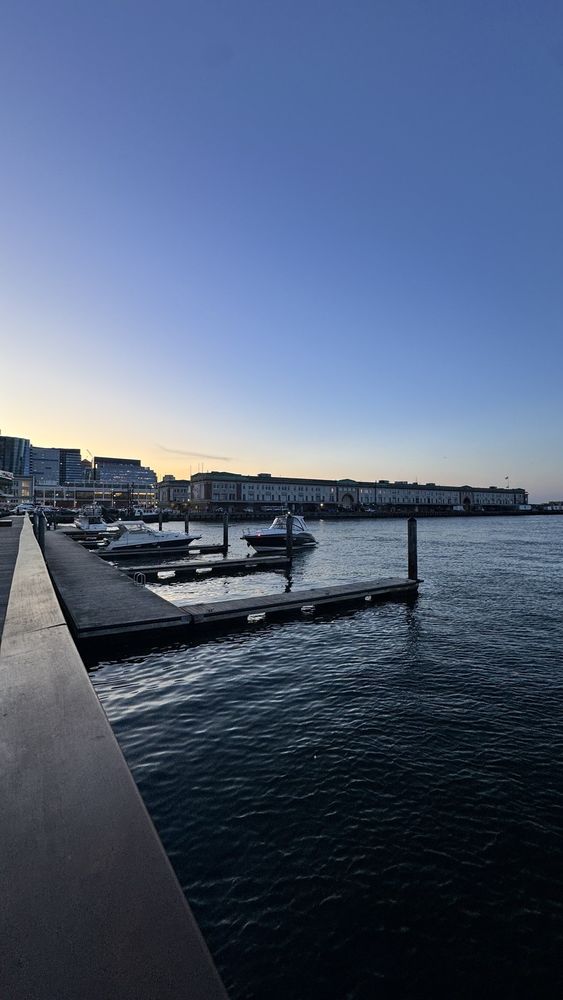
Along the water, the Charles River Esplanade is the city's main spot for running, kayaking, and summer concerts at the Hatch Shell. The Rose Kennedy Greenway, built over the old elevated highway, adds public art, food trucks, and fountains through downtown. For Back Bay and Beacon Hill residents, the Esplanade and Public Garden are within a few minutes' walk.
Dining, Shopping, and Culture in Boston
Boston's dining scene runs from colonial-era institutions to chef-driven restaurants. The North End, the city's oldest residential neighborhood, is known for Italian trattorias, Neptune Oyster, Regina Pizzeria, and the long-running cannoli rivalry between Mike's Pastry and Modern Pastry. Union Oyster House is considered the country's oldest continuously operating restaurant, and the Seaport and Fort Point serve modern seafood on the harbor. Quincy Market, Eataly at the Prudential Center, and High Street Place cover food hall dining.
For shopping, Newbury Street mixes luxury brands with independent boutiques and galleries, while Copley Place and the Prudential Center house Saks Fifth Avenue, Gucci, and Louis Vuitton under one roof. The SoWa Open Market brings local artisans and vintage sellers to the South End on weekends.
Culture is close at hand: the Museum of Fine Arts, the Isabella Stewart Gardner Museum, the Museum of Science, and the New England Aquarium. The Boston Symphony Orchestra performs at Symphony Hall, and Broadway tours play at the Citizens Opera House, the Colonial Theatre, and the Wang Theatre.
Cost of Living and Property Taxes in Boston
Boston's overall cost of living runs about 45% to 50% above the national average, and housing is the biggest reason, at more than double national medians. Massachusetts has a flat 5% income tax, with an extra 4% surtax on income above about $1.1 million, and a 6.25% sales tax with no added local tax. Winter heating pushes utility bills about 20% to 30% above national benchmarks.
Property taxes are where Boston works in a homeowner's favor. The city taxes commercial property at a higher rate, which keeps the residential rate relatively low at $12.40 per $1,000 of assessed value. Owner-occupants who register the home as their primary residence also qualify for the residential exemption, which removes $351,108 from the assessed value.
On an $800,000 owner-occupied condo, the exemption lowers the annual tax bill from about $9,920 to about $5,566. Investors and second-home owners pay the full rate, so the same unit costs more to hold as a rental. Rates and exemption amounts are set each fiscal year, so confirm current figures with the City of Boston before budgeting.
Buying a Home in Boston
Buying in Massachusetts follows a process that surprises many out-of-state buyers:
- Get pre-approved and choose a local agent. A pre-approval letter from a lender familiar with Boston condos and historic properties strengthens your offer.
- Submit an Offer to Purchase. This is a binding document, usually backed by a deposit of $1,000 or about 1% of the price.
- Complete the home inspection. Inspection windows typically run 7 to 10 days.
- Sign the Purchase and Sale Agreement. This usually happens 10 to 14 days after the offer is accepted, when you bring your total deposit up to 5% of the price.
- Work with a closing attorney. In Massachusetts, a licensed attorney handles the closing and title work rather than a title company alone.
- Close and file for the residential exemption. Owner-occupants should file with the city promptly to secure the tax savings.
Because most Boston homes are condos, review the association's budget, reserve fund, history of special assessments, and master insurance policy before signing the P&S. Budget 1% to 2% of the purchase price for closing costs, including attorney fees, title insurance, recording fees, and lender charges.
Work With Colin Bayley
Colin Bayley has guided buyers, sellers, developers, and investors through Boston's most sought-after neighborhoods and suburbs, including Back Bay, Beacon Hill, the South End, the Seaport, Cambridge, Brookline, and Newton. He is known for honest advice and close attention to his clients. He offers deep knowledge of the local market and access to on- and off-market opportunities, whether you're looking for a historic brownstone or a contemporary penthouse. If you're weighing neighborhoods, preparing to sell, or relocating to Boston, Colin can help you understand where the value is and what fits your goals. Call him at (978) 761-0240, email [email protected], visit his office at 126 Newbury St, Suite 2, Boston, MA 02116, or reach out here to start the conversation.