Welcome to Back Bay, Boston, MA
Back Bay is a 450-acre stretch of made land between the Charles River and the Southwest Corridor, and it is the most architecturally cohesive neighborhood in Boston. Wide parallel avenues — Beacon, Marlborough, Commonwealth — run east to west, crossed by streets named in alphabetical order from Arlington to Hereford. Once you understand that grid, you never get lost here.
What makes Back Bay unusual among prestigious urban neighborhoods is how much it does at once. Quiet residential blocks of Victorian brownstones sit two minutes from designer retail on Newbury Street, three minutes from a Beaux-Arts library holding Sargent murals, and five minutes from a 64-acre riverfront park. It has a 100/100 Walk Score, Amtrak service to New York, and single-family townhouses trading in the multi-millions. Buyers come here for that density of access, and they stay because the historic district designation means the streetscape they bought into isn't going to change.
Expect condominium pricing well above $1,200 per square foot, with brownstone townhouses regularly in the multi-million dollar range.
History of Back Bay
Before the 1850s, Back Bay was water — a 570-acre tidal flat behind the Boston peninsula, which is exactly where the name comes from.
The trouble started with the Mill Dam of 1821, built across the bay to generate industrial water power. It worked, but it cut off tidal flushing, and the trapped bay became a stagnant sewage basin. By mid-century the smell alone forced the city's hand.
The solution was one of the largest urban engineering projects in 19th-century America. From 1857 to 1882, trains ran around the clock hauling gravel and soil from quarries in Needham, filling the bay block by block from Arlington Street westward. This is why the architecture reads chronologically as you walk west: the eastern blocks were finished decades before the western ones.
Architect Arthur Gilman laid out the streets on a French model, drawing directly from Baron Haussmann's Paris. Boston's high society migrated in from Beacon Hill and the South End through the late 19th century. Copley Square took shape around Trinity Church (1877) and the Boston Public Library (1895). The Prudential Tower arrived in 1964 and the John Hancock Tower in 1976, adding skyscrapers to the residential grid, and in 1966 the neighborhood was designated a historic district — the reason the brownstone blocks survived the era of urban renewal intact.
Back Bay Architecture and Brownstones
Back Bay holds America's most complete collection of 19th-century Victorian residential architecture, built almost entirely between 1860 and 1900. Because construction moved east to west with the landfill, the neighborhood is a working timeline of Gilded Age taste.
The eastern blocks — Arlington, Berkeley, Clarendon — are dominated by French Second Empire homes from the 1860s: steep mansard roofs, slate shingles, dormer windows. The 1870s brought Academic Classical and Renaissance Revival work, more restrained, with symmetrical brick facades and smooth ashlar stone. The 1880s belong to Richardsonian Romanesque — heavy red sandstone and granite, massive rounded arches over doorways, thick rusticated masonry. By the 1890s, as filling reached Gloucester and Hereford, styles turned ornamental: Châteauesque and Queen Anne facades with asymmetrical layouts, copper turrets, steep gables, and terra-cotta relief panels.
A note buyers appreciate: many "brownstones" here aren't brownstone. Plenty combine red face brick with brown Connecticut sandstone trim, and others are faced in limestone entirely.
Three details define these houses:
The stoop. High stone staircases lift the entrance six to ten feet above the sidewalk. That wasn't decoration — it separated formal rooms from 19th-century street mud and horse traffic while letting light into the service level below.
Bay windows. Curved and angled multi-story bays project from the facades to catch low winter sun across narrow street corridors. On a south-facing block in January, the difference is real.
Wood piles. Every townhouse in Back Bay rests on hundreds of submerged spruce logs driven into the blue clay beneath the water table. Groundwater levels are a genuine maintenance topic in this neighborhood, and any serious inspection here should address them.
Housing and Home Styles in Back Bay
These houses were built as single-family townhouses for wealthy families, typically four to five floors organized around strict separation of household classes. Understanding the original layout tells you a lot about what you're walking into today.
Level | Original Function | How It's Used Now |
|---|
Basement / street level | Kitchens, storage, delivery access, staff workspace | Garden-level units or renovated kitchens |
First floor (piano nobile) | Entrance hall, double parlors, dining room, tall ceilings | Primary living and entertaining space |
Second floor | Master suites, library, private sitting rooms | Primary bedrooms or luxury condos |
Third & fourth floors | Children's rooms, guest quarters | Additional bedrooms or floor-through condos |
Top floor / attic | Live-in servant quarters, utility | Penthouse suites, roof deck access |
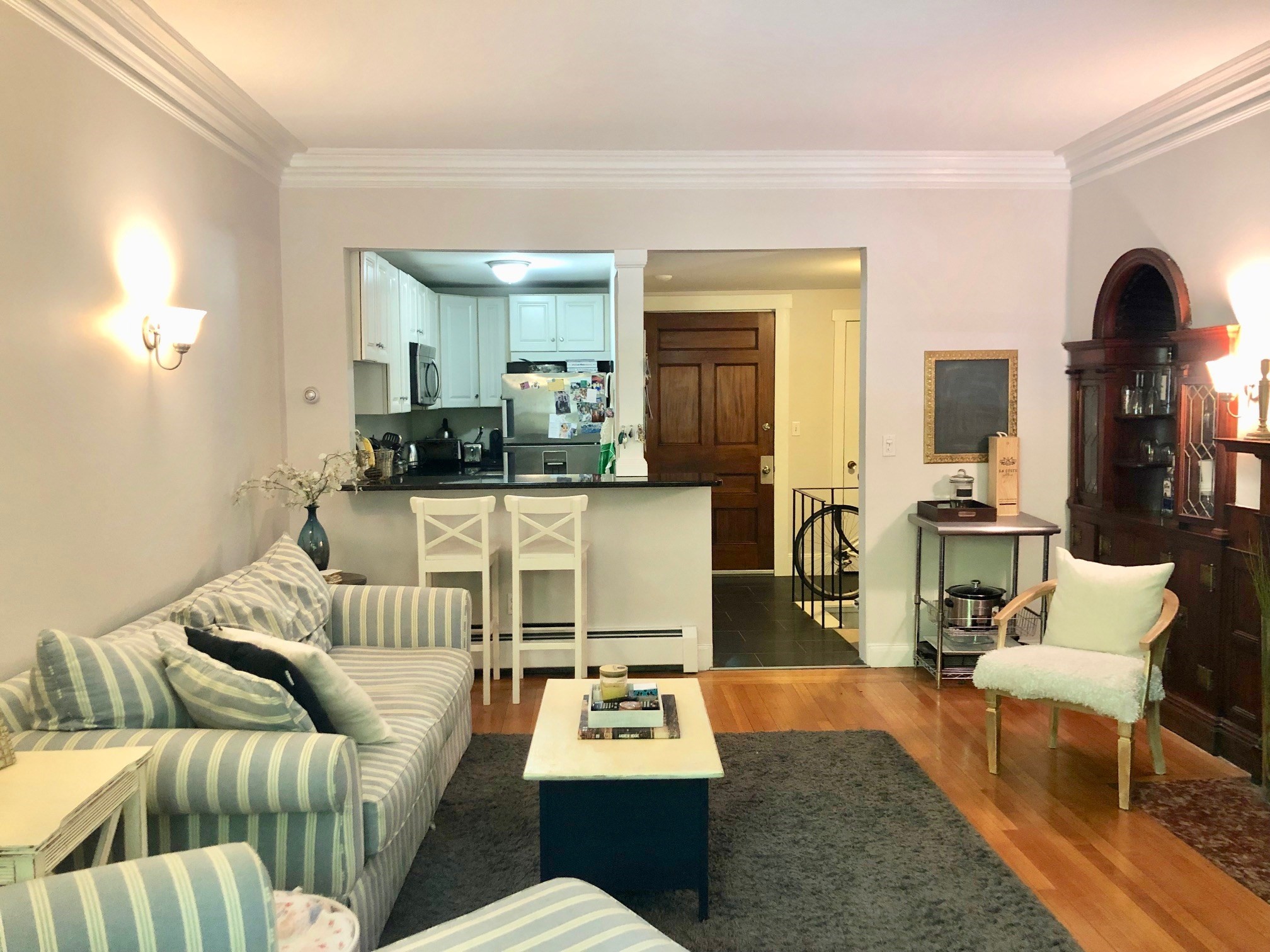
Most Back Bay brownstones have since been converted into multi-unit luxury condominiums, floor-through apartments, or institutional offices, with exterior facades strictly preserved. A smaller number of intact single-family townhouses remain, and they command a premium.
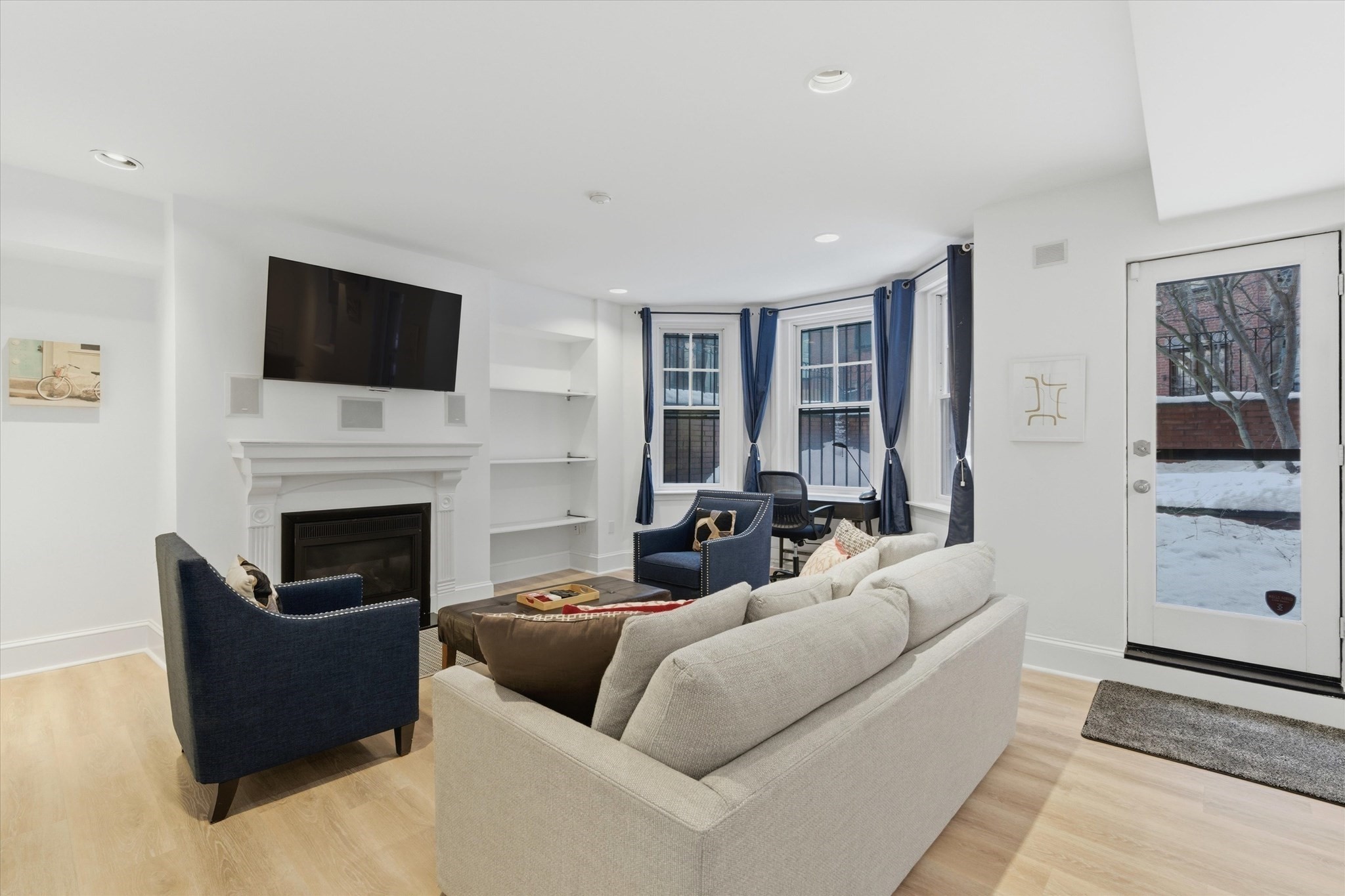
The practical result is a wide range of product under one architectural umbrella: garden-level one-bedrooms, full-floor units with original parlor moldings and bays, penthouse conversions with private roof access, and full-building townhouses. There is also new-construction and full-service high-rise inventory along the Boylston Street corridor for buyers who want doormen and elevators rather than a historic stair hall.
Living in Back Bay: Lifestyle and Atmosphere
The neighborhood splits cleanly between quiet residential corridors and busy commercial avenues, and knowing which street does what matters enormously when you're choosing an address.
Street | Character | What to Expect |
|---|
Beacon Street | Residential | Historic townhouses facing the Charles; quiet, high-end |
Marlborough Street | Residential | Best-preserved corridor, brick sidewalks, heavy tree canopy |
Commonwealth Avenue | Residential / park | Wide boulevard split by the Comm Ave Mall promenade |
Newbury Street | Commercial | High foot traffic, patio dining, boutiques |
Boylston Street | Commercial / mixed | Glass towers, hotels, retail centers |
Daily life here is genuinely pedestrian. The grid is flat and uniform, and residents walk to the Financial District or to offices in the Prudential Center rather than commute. Mornings tend toward the Esplanade for running and cycling; the Commonwealth Avenue Mall functions as the neighborhood's front lawn; the Public Garden is a block past Arlington Street.
Food is a large part of the appeal. Sidewalk dining runs the length of Newbury Street, Tatte anchors the neighborhood-bakery habit, and the higher end includes seafood at Saltie Girl and Italian at Sorellina.
The trade-off worth naming: this is a dense, high-traffic neighborhood with restricted parking. Residents who thrive here are the ones who use the T and their feet.
Landmarks and Attractions in Back Bay
Copley Square is the neighborhood's civic center — open-air markets, architectural heavyweights on three sides, and the Boston Marathon finish line.
The Boston Public Library (McKim Building), completed in 1895, is a Beaux-Arts landmark and still a working library. Bates Hall's reading room, the marble staircases, and the Italianate courtyard are open to anyone who walks in.
Trinity Church, H.H. Richardson's 1877 masterpiece, is the building that gave Richardsonian Romanesque its name. Heavy stone arches, and stained glass by John La Farge and Edward Burne-Jones.
Newbury Street runs eight blocks of Victorian brownstones converted into boutiques, galleries, and cafes.
The Prudential Center and View Boston combine retail and office space with a three-story observatory at the tower's summit and 360-degree skyline views.
200 Clarendon, better known as the John Hancock Tower, is New England's tallest building at 790 feet. Its all-glass minimalism was designed to mirror Trinity Church and Copley Square rather than compete with them.
Shopping on Newbury and Boylston Street
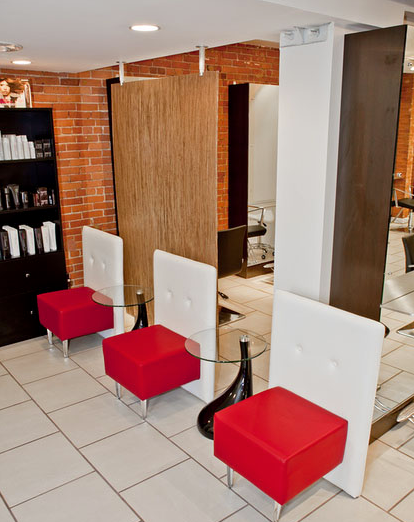
Newbury Street is the reason many people know Back Bay by name. Eight blocks of brownstone storefronts, and the character shifts as you walk. The Arlington end runs to established luxury retail and designer flagships. Move west past Dartmouth and Exeter and it loosens into independent boutiques, art galleries, salons, and cafes with sidewalk seating. By the Mass Ave end it's more casual and student-adjacent.
The garden-level and parlor-level retail spaces mean shops here are small, layered into former residences, with stairs up or down from the sidewalk. It's a walking-and-browsing street rather than a destination-store street.
Boylston Street handles the other half of the equation: larger-format retail, hotels, and the two indoor centers, the Prudential Center and Copley Place, connected by skybridge. That connection is a real amenity in February.
Restaurants and Dining in Back Bay
Dining here spans a full range, and the neighborhood's density means most of it is within a ten-minute walk of any address.
The everyday layer is cafes and bakeries — Tatte being the local shorthand for the category — plus the sidewalk patios along Newbury Street that fill from spring through fall. The higher end leans toward seafood and Italian, with Saltie Girl and Sorellina among the most recognized names. Boylston Street and the Prudential corridor add hotel dining and larger rooms suited to business meals.
What Back Bay offers that most Boston neighborhoods can't is optionality within a few blocks: a bakery breakfast, a patio lunch, and a serious dinner without moving your car, because you didn't bring one.
Parks and Outdoor Spaces
Back Bay is framed by three green corridors, and two of them connect directly into Frederick Law Olmsted's Emerald Necklace.
The Commonwealth Avenue Mall is a 32-acre French-inspired promenade running down the center of Comm Ave from Arlington Street to Kenmore Square, under a canopy of mature elms and red oaks. It's lined with public sculpture, including the Boston Women's Memorial.
The Charles River Esplanade occupies the neighborhood's northern edge — 64 acres of linear park with paved running and cycling trails, community docks at Community Boating Inc., and lawns facing the Cambridge skyline.
The Boston Public Garden borders Back Bay at Arlington Street. America's first public botanical garden, with the lagoon Swan Boats and the Make Way for Ducklings bronzes.
Arts, Culture, and Events
The Hatch Shell on the Esplanade is the neighborhood's outdoor stage — free summer movie nights, Boston Landmarks Orchestra concerts, and the Boston Pops Fireworks Spectacular every Fourth of July.
The Boston Public Library functions as a cultural institution well beyond its collections. It houses historic frescoes by John Singer Sargent, Pierre Puvis de Chavannes, and Edwin Austin Abbey, and runs a free courtyard concert series through the summer.
Trinity Church hosts organ recitals, choir performances, and architectural tours.
The Boston Marathon turns Boylston Street into the most-watched finish line in the sport every April on Patriots' Day, with crowds gathered outside the library.
Public art is woven through the neighborhood rather than concentrated: the Boston Women's Memorial on the Mall near Fairfield and Gloucester, with ground-level statues of Abigail Adams, Lucy Stone, and Phillis Wheatley; the Vendome Firefighters' Memorial at Dartmouth, an elliptical granite arc honoring nine fallen Boston firefighters; and the Arthur Fiedler Memorial bronze on the Esplanade.
Getting Around Back Bay
Back Bay is one of the most transit-connected neighborhoods in North America — flat terrain, wide streets, and a grid that makes walking directions almost unnecessary.
Hub | Service | Reaches |
|---|
Back Bay Station | Orange Line, Amtrak, Commuter Rail | NYC, Providence, South End, Logan via Logan Express |
Copley Station | Green Line (B, C, D, E) | Library, North Station, Fenway, Chestnut Hill |
Arlington Station | Green Line | Public Garden, Theater District, Downtown Crossing |
The Green Line runs directly under Boylston Street with stops at Arlington, Copley, and Hynes Convention Center. The Orange Line stops at Back Bay Station at Dartmouth and Clarendon, running north toward North Station and Assembly and south toward Jamaica Plain. Back Bay Station also carries Commuter Rail service on the Framingham/Worcester, Needham, and Franklin lines, plus Amtrak Acela and Regional trains to New York and Washington.
Cycling works well here — dedicated lanes on Beacon and Arlington, the Esplanade paths, and Bluebikes docks every few blocks.
Driving is the weak point. On-street parking is almost entirely resident-permit only, and visitors rely on the garages beneath the Prudential Center and Copley Place. If you own a car, deeded parking is one of the most valuable line items in a Back Bay listing, and worth prioritizing early in a search.
Schools Serving Back Bay
Boston Public Schools uses a home-based assignment system rather than fixed neighborhood zoning, so a Back Bay address generates a personalized list of options rather than one guaranteed school. Families should verify current assignments directly with BPS, since the system changes.
Back Bay's real advantage is the concentration of independent schools inside the neighborhood itself. Commonwealth School is a highly academic co-ed private high school, grades 9–12, housed in brownstones on Commonwealth Avenue. Kingsley Montessori School serves toddler through grade 6 from two historic buildings on Fairfield and Marlborough. The Newman School on Marlborough Street is co-ed, grades 7–12, offering the International Baccalaureate Diploma Program.
On the public side, nearby BPS options include Josiah Quincy Elementary in Chinatown and the Eliot K-8 Innovation School in the North End. Back Bay students are also eligible for Boston's exam schools by entrance test: Boston Latin School in Fenway, America's oldest public school; Boston Latin Academy in Roxbury; and the John D. O'Bryant School of Mathematics & Science, also in Roxbury.
Neighborhoods Near Back Bay
Back Bay sits at the geographic center of Boston, which means the neighborhoods around it are all walkable — a useful thing when you're comparing options.
Neighborhood | Character | Walk from Copley Square |
|---|
Beacon Hill | Federal-era, gas-lit brick streets | 10–15 min |
South End | Victorian bowfronts, artistic, residential | 5–10 min |
Fenway-Kenmore | Sports-centric, collegiate, busy | 10–15 min |
Downtown / Financial | High-density commercial, skyscrapers | 15–20 min |
Beacon Hill lies across the Public Garden — narrow brick streets, gas lamps, and Federal-style architecture, a tighter and older counterpoint to Back Bay's wide 19th-century grid.
The South End is directly across the Southwest Corridor rail tracks. Brick bowfront rowhouses, pocket parks, and a restaurant and arts scene centered on Tremont Street. Buyers priced out of Back Bay often land here, and often prefer it.
Fenway-Kenmore starts past Massachusetts Avenue, home to Fenway Park, the Longwood Medical Area, and the Museum of Fine Arts.
The West End and Government Center sit past Beacon Hill, with Massachusetts General Hospital and the city's civic complex. Downtown Crossing and the Theater District are a straight shot east along Boylston or St. James.
Frequently Asked Questions About Back Bay
Is Back Bay safe? Yes. It is widely considered one of Boston's safest neighborhoods, helped by constant foot traffic, a strong residential presence, and active business improvement districts.
Why are the cross streets in alphabetical order? When the bay was filled in the 19th century, engineers named the cross streets east to west in alphabetical sequence using British place names: Arlington, Berkeley, Clarendon, Dartmouth, Exeter, Fairfield, Gloucester, Hereford.
Is Back Bay expensive to live in? Yes — it's one of Boston's most expensive residential areas. Condominiums average well over $1,200 per square foot, and single-family brownstones frequently sell in the multi-million dollar range.
Can you walk to Fenway Park from Back Bay? Yes, roughly 15 to 20 minutes from western Back Bay near Hynes Convention Center or Mass Ave.
Where does the name "Back Bay" come from? The area was literally a bay — a tidal basin located behind the Boston peninsula relative to Boston Harbor.
What should I know about buying in a historic brownstone? Two things above all: the building sits on wood pilings, so groundwater and structural history matter, and the historic district designation limits what can be changed on the exterior. Both are manageable — but they belong in the diligence conversation early, not late.
Work With Colin Bayley
Colin Bayley works out of an office at 126 Newbury Street, in the middle of the neighborhood this guide describes. He represents buyers, sellers, developers, investors, and landlords across Back Bay, Beacon Hill, the South End, Seaport, Cambridge, Brookline, and Newton, with a focus on Boston's most competitive addresses. Clients tend to describe the same things: fast responses, honest advice, and access to opportunities — including off-market ones — that come from years of working these specific blocks. Whether you're weighing a historic brownstone against a contemporary penthouse, or trying to understand what your current Back Bay property is worth in today's market, reach out at (978) 761-0240 or [email protected] to start the conversation.